Haven Onboarding: Designing for Trust & Belonging
Category:
Mobile Design
Client:
Haven
Redesigned onboarding to improve new user activation and community engagement
My Role
UX & Interaction Design
Team
Rommia White (CEO), Rajvi Sanghvi (UX Designer), Nnameka (Front-End Developer), Amar (QA Engineer)
Duration
2 Months From Sept'25 to Oct'25
Methods
Rapid Prototyping, High-Fidelity Prototyping, Usability Testing, User Interviews
01
OVERVIEW
About Haven
Haven is a peer-to-peer community platform designed to make it easier for people to give and receive help within their local circles. Think of it as a "karma economy" where:
Earn points by giving.
More points = higher karma.
Answer when called. Decline to help your haven more than 3x in a row, and risk suspension from the commune.
Every successful exchange creates exponential positivity. Be kind, do your part, and watch your world expand.
The Challenge
1
Too many verification steps before users could see any value
2
Felt confused about what to do after verification
02
RESEARCH
Survey Results
n=27 across 2 apartment buildings (Live for MVP testing)
48% said "I'm not sure what to post"
30% said "I'm not sure who else is using Haven or if I trust them"
7% didn't know what a "spark" was
What we learned
Users didn't mind the steps but they minded not knowing why
Verification must be clearly justified, not just speed
Users compared Haven to Facebook Groups, WhatsApp, and Nextdoor
Show the community is alive before asking for commitment
Trust signals matter: real photos, real names
Profile setup isn't bureaucracy, it's community building
Users felt hesitant asking for help
Tone must feel supportive and permission-giving
Non-Negotiable Constraints
1
Invite Only Access
Haven communities are built on real relationships. Invite-only access ensures every member is vouched for by someone already in the network.
2
Manual Approval by Admins
Each request is reviewed by a human community admin and not an algorithm. This preserves neighborhood-level trust and accountability.
3
Phone + email verification must both occur
Both details are required so community admins can verify a user's identity and confirm they actually live in the building or neighborhood they're requesting to join.
These constraints were required to preserve safety and community trust
03
SOLUTION
Designing the Flow
Streamlining Verification
Building Trust Through Profiles
old design
Rewarding
Explaining Points/sparks system
old design
Haven Entry
old design


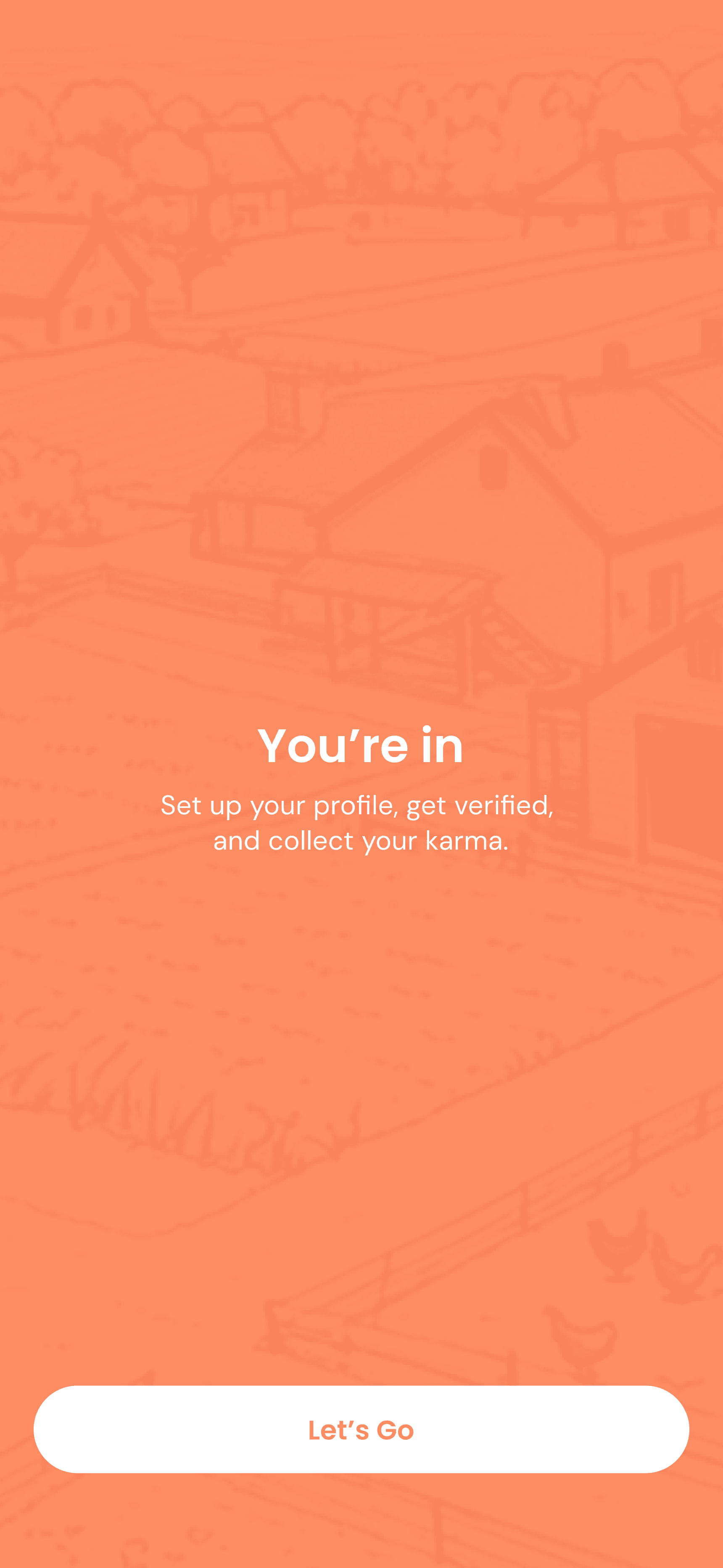
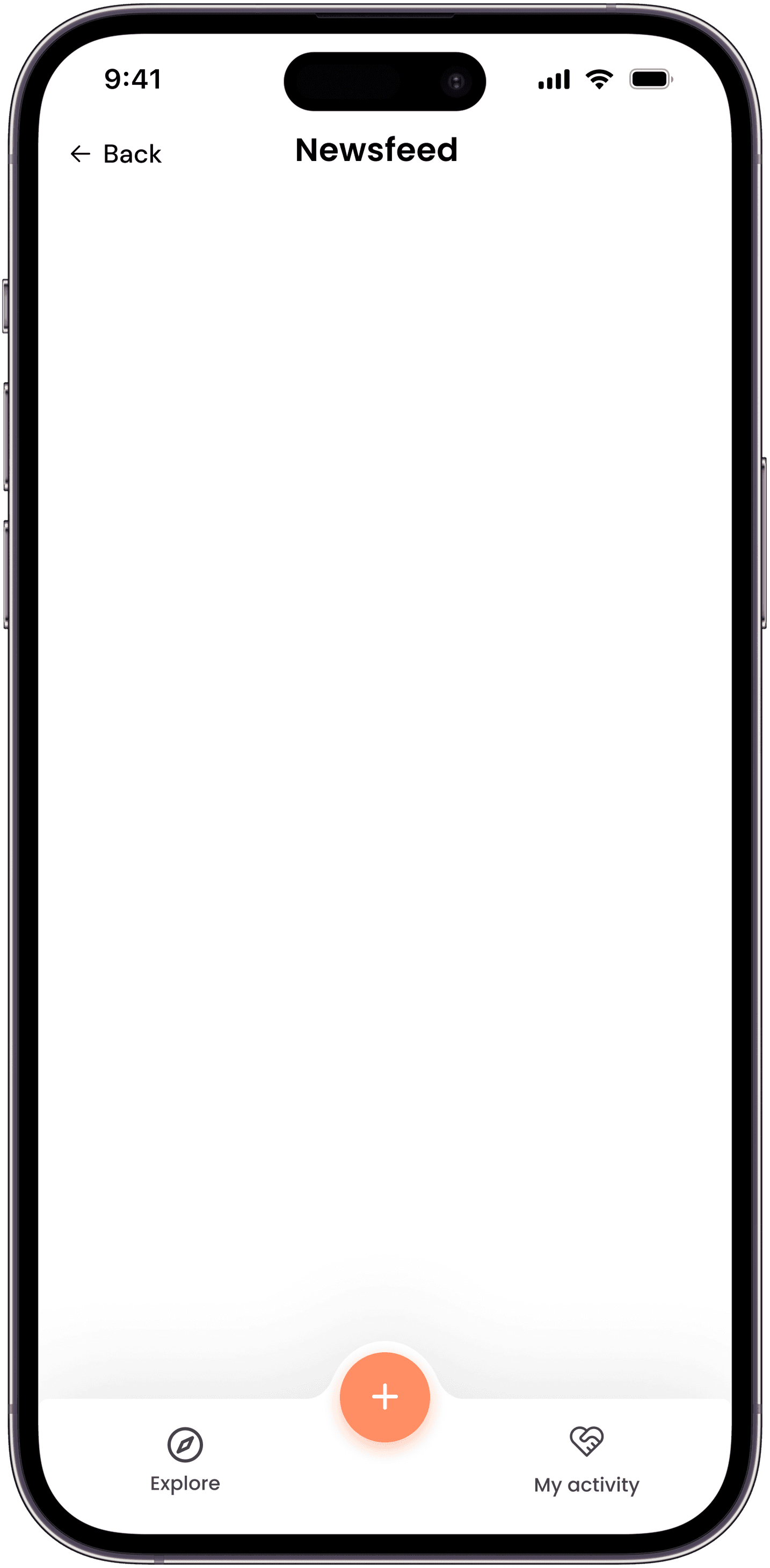
Request Submitted + Entry (Enable Notifications)






04
IMPACT
Launched
Designs handed off in December 2025. Launched mid-January 2026. Production metrics pending as new user sign-ups ramp up. Usability testing ongoing.
Next Steps
Monitor completion rates post-launch
Continue usability interviews to validate trust perception
Iterate based on early user feedback
05
REFLECTION
Designing Haven's onboarding reaffirmed that trust and clarity matter more than speed in community-based products. A seamless flow means little if users don't emotionally connect to the purpose.
1
Context First, Action Second
What I Learned:
Building emotional alignment BEFORE data collection is crucial for community products. The welcome animation wasn't "nice to have", it was the foundation of trust.
What I'd Do Differently
Test different animation styles earlier. We spent time on copy when illustration style might have mattered more.
2
Test Early, Test Often
What I Learned:
Points only mattered when contextualized (e.g., "points = higher trust = faster help"). Abstract gamification fails; connected gamification succeeds.
What I'd Do Differently
Prototype 3 different incentive models (points, badges, social proof) and test with users before committing to one.
3
Design for Belonging